José-Alain Sahel, M.D., is one of the world’s most celebrated vision scientists and a pioneer in the field of retinal prostheses. As Chair of the Department of Ophthalmology at the University of Pittsburgh School of Medicine and Founder of the Institut de la Vision in Paris, Dr. Sahel has dedicated his career to finding solutions for blindness.
Dr. Sahel played a foundational role in the development of the PRIMA system and served as a senior author of the PRIMA clinical trial. The study results were recently published in The New England Journal of Medicine. This peer-reviewed publication details the primary outcomes of the trial, reporting the safety and functional improvements observed in patients implanted with the device.
In this second installment of our series featuring the principal investigators behind the trial, we spoke with Dr. Sahel about the significance of these findings and the resilience required to turn a decades-old concept into clinical reality.
Q: The PRIMA clinical trial results are being hailed as a historic moment. How do you view these results in the context of your decades of work?
It’s the first time that any attempt at vision restoration has achieved such results in a large number of patients. More than 80% of the patients were able to read letters and words, and some of them are reading pages in a book. This is really something we couldn’t have dreamt of when we started on this journey more than two decades ago.
It’s the first time an artificial retinal implant has worked so well in a large study, with a procedure that could be carried out by multiple surgeons. This is also the first time an artificial retina has been successfully used in age-related macular degeneration (AMD).
Q: You’ve championed retinal implants for a long time. How has the general sentiment toward this technology shifted over the years?
I’ve been working on the idea of using an implant as an artificial retina to restore vision since around the mid-nineties. We initially wanted to understand what was required to provide useful vision for patients, because while enabling blind people to detect light signals might look good in a publication, it was not going to improve their quality of life.
With our collaborators in Geneva, we carried out the first studies in the early 2000s showing that while the human retina contains 130 million photoreceptors, an implant with between 300 and 600 pixels could generate useful vision. But for many years, people struggled and failed to translate such knowledge into a working technology.
My friend and colleague Daniel Palanker, who invented the PRIMA system, has a presentation slide called “The Graveyard of Retinal Implants.” Despite 15 years of hype, almost everything failed, either in trials or on the market. I remember one of the first attempts from a group of scientists in Chicago, but their implant didn’t supply enough electrical stimulation to the retina to elicit visual responses in the brain. There were startups from Australia, Germany, Israel, US, and Japan, but they all came and went.
Perhaps most famously, Second Sight developed an artificial retina which they implanted in totally blind patients with retinitis pigmentosa, and they achieved some results. We were the first in Europe to test the technology. They got a humanitarian exemption from regulators in the US and temporary approval in Europe, but because the visual performance was not amazing, and the surgery required was quite complex, it ended up being a commercial failure.
So, if you had asked people two years ago, ‘Is there any future in this field?’ I would have been among the very few to have still replied, ‘Yes.’
Q: How does the success of PRIMA build on the last 25 years of research?
We first wanted to make sure that we had a technology that many surgeons could adopt in many different countries to ensure that a large number of patients could experience the benefits. To that end, the surgery to fit the implant had to be relatively straightforward, which is something that Yannick LeMer on my team in Paris worked on for many years.
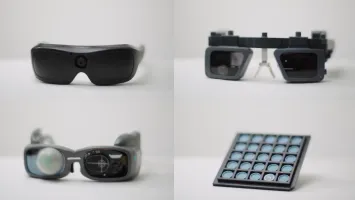
Crucially, the PRIMA implant is wireless. This enables it to be paired with augmented reality glasses — which use a camera to capture the image the patient is attempting to see, and a projector which delivers the visual input into the eye using intensified, invisible near-infrared light — as well as a pocket processor which enhances and magnifies the image.
Before the PRIMA clinical trial, we carried out a pilot study in France with five patients with advanced AMD, and another four patients in Pittsburgh, which laid the groundwork for this trial.
Q: What is the patient experience like regarding rehabilitation?
The PRIMA system also relies on the patients themselves. It’s not a case of just having the implant fitted and vision is magically restored. Patients really have to learn how to see again, and to train their brains to use the new information they are receiving. In our trial, rehabilitation experts and occupational therapists have played a big role in ensuring that patients are able to make the most of the vision that they’re regaining in their daily lives.
Q: Looking to the future, how do you envision the technology behind PRIMA evolving?
We want to increase the resolution on the implant, and upgrade the software to prioritize the visual information which is most important for the patient so the system “learns” what they want. For this, the patients who have already been using the system as part of the PRIMA clinical trial are going to play a key role in contributing to our ongoing assessment and the improvement of the software.
I don’t think we’ll ever be able to restore full 20/20 vision with the implant alone, but with this image processing outside the eye, zooming is possible and effective at increasing the visual acuity. We’re investigating strategies that could further improve people’s quality of life and take them above the threshold for legal blindness. It won’t be normal vision, but it will be useful vision. In the future, there’s also the possibility that retinal implants can be combined with one of my other active research areas, optogenetics, to treat some of the most severely blind patients, such as those with retinitis pigmentosa.
Q: Do you see a clinical rationale for applying this technology to other forms of vision loss beyond geographic atrophy?
We are exploring clinical trials for PRIMA with patients who have retinitis pigmentosa and Stargardt disease.
There is also a group of patients who have experienced vision loss through serious, trauma-induced damage to their retina, known as a subretinal hemorrhage. For example, soldiers on the battlefield who have suffered injury from proximity to explosions. Depending on the extent of the damage, it may be possible to use the PRIMA system to restore some of their vision, though this would need to be approached on a case-by-case basis.
Q: This technology faced a period of profound uncertainty, what kept the team moving forward during those difficult times?
We originally created a company called Pixium Vision to develop retinal implants, stemming from a European technology. I became enthusiastic about Daniel Palanker’s work. Despite the initial clinical successes, there were financing challenges, and the company was dissolved. Yet the team never gave up. They still believed in the technology, and they continued to work, even after the company’s demise, on ways to rescue the situation and form a plan to continue their work. It took a huge amount of resilience and determination to not give up, but thankfully, by some late miracle, the company was acquired by Science Corporation, and now we’re in a much better situation, thanks to that.

If you or a loved one are affected by advanced dry AMD or an inherited retinal disease, you can join our patient registry to stay informed about clinical trial opportunities.
PRIMA is CE marked in the European Union and registered for supply in the United Kingdom. It is not approved or available for sale in any other country.
