Today marks the European commercial launch of PRIMA, the first and only treatment shown in clinical trials to restore functional central vision to patients with geographic atrophy (GA) caused by age-related macular degeneration (AMD), a leading cause of blindness. PRIMA has received a CE (Conformité Européenne) mark under the European Union Medical Device Regulation from DEKRA, authorizing its commercial availability across 30 European countries.
Papers recently published by the New England Journal of Medicine (NEJM) [original article, editorial] showed that PRIMA restored vision to patients suffering from GA due to AMD.
PRIMA is the first BCI device to receive CE marking for form vision restoration (reading letters, numbers, and words). We are also announcing the country-specific reimbursement applications and clinical site activations are underway across Europe. The first commercial implant of PRIMA is expected soon in Germany.
We are proud to be the first BCI company with a CE marked device for the restoration of detailed form vision. For decades, losing central vision to this disease meant losing the ability to read, recognize faces, and ultimately losing independence. There was no viable treatment. Now there is. We intend to make access to PRIMA real and reimbursable, as quickly as possible.
In the United States, we are working with the Food and Drug Administration (FDA) to bring PRIMA to the US market. PRIMA has received FDA Breakthrough Device designation and Humanitarian Use Device designation.
AMD-associated GA affects more than five million people globally, causing the progressive destruction of photoreceptors at the center of the retina (responsible for reading and recognizing faces), and eventual blindness.
The multi-center clinical trial published by the NEJM evaluated the PRIMA BCI implant system in 38 patients across 17 clinical sites in five countries. The study results include:
- Mean improvement of 25.5 letters (more than 5 lines) on ETDRS letter chart.
- 84% of patients reported the ability to read letters, numbers, and words, restoring functional central vision.
- 80% of patients achieved significant prosthetic visual acuity improvements of at least logMAR 0.2 (equivalent to 10 letters on ETDRS chart) at 12 months (p<0.001).
- The implant was placed under the atrophic macula without a decline in mean existing natural vision.
The PRIMA BCI system is a novel subretinal photovoltaic implant paired with specialized glasses. The glasses project near-infrared light to the implant which converts it into electrical stimulation signals. A “zoom-in” feature provides patients with the ability to magnify letters. The implant has an ultra-thin profile and seamless, wireless integration.
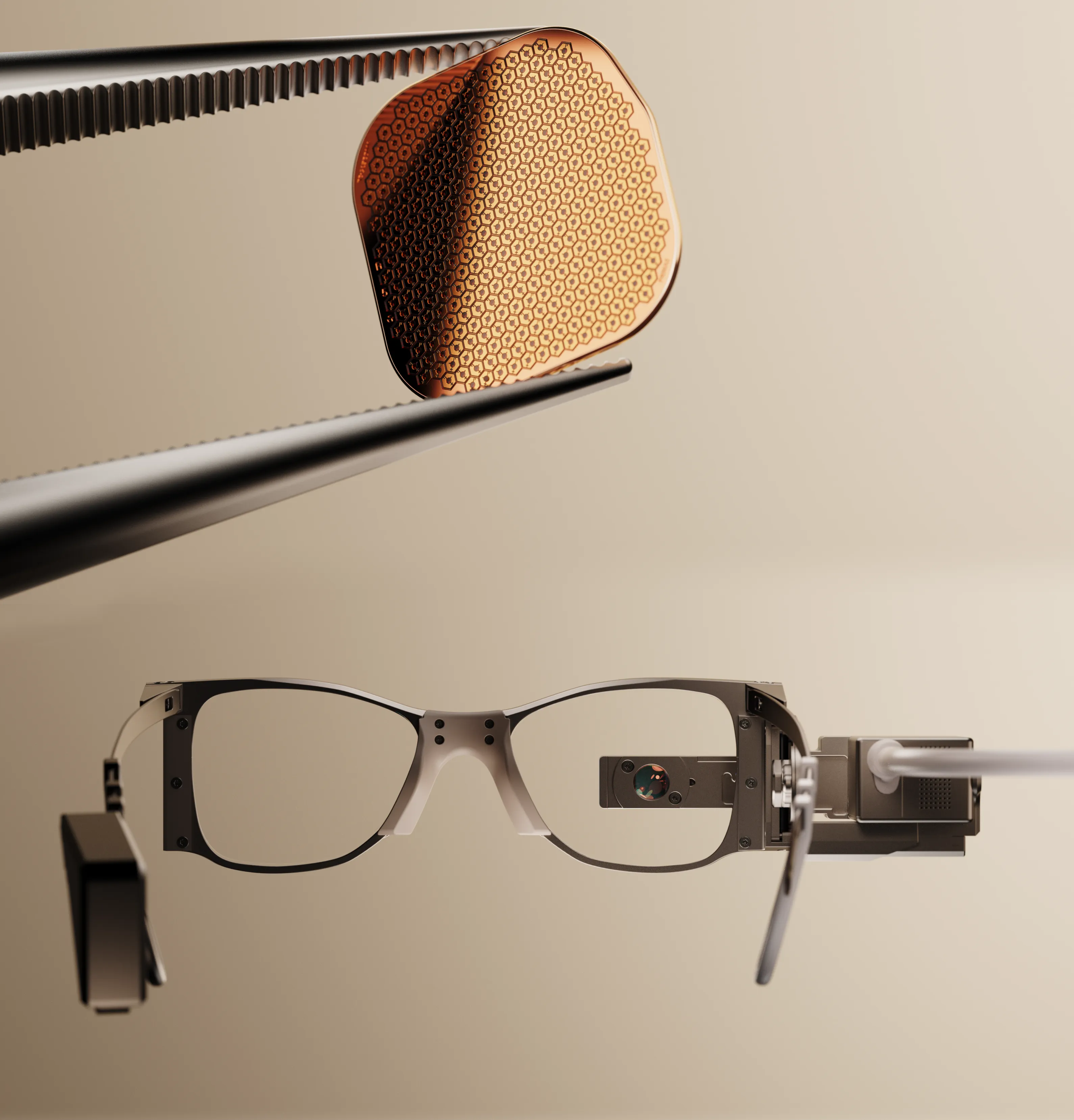
Pictured above: The PRIMA implant, measuring 2 x 2 mm, held between tweezers and the PRIMA glasses
Anyone interested in more information on PRIMA may visit prima.science.xyz or register their interest at patients.science.xyz.
PRIMA is not commercially available outside the EU/EEA.
