Our wireless PRIMA BCI implant is now available commercially in Europe for patients blinded by geographic atrophy (GA) due to age-related macular degeneration (AMD). Hundreds of thousands of people, typically over 60 years old, have lost their central vision to GA. The New England Journal of Medicine published a study evaluating the safety and efficacy of PRIMA in 38 patients with geographic atrophy due to AMD. Of the 32 patients assessed at 12 months, eighty-four percent of patients reported the ability to read letters, numbers, and words.
Earlier this year, we announced the beginning of our first clinical trials of the PRIMA implant for patients with serious vision impairment caused by Stargardt disease and retinitis pigmentosa (RP). These, like GA, are serious diseases with devastating consequences. I have cared for patients with Stargardt disease and RP, and it is heartbreaking to tell them that there is currently no treatment.
Like GA, Stargardt disease primarily affects the outer retina with the photoreceptors being lost over time – but the inner retina, again like GA, can be spared from any injury. Stargardt disease is characterized by a central blindspot that grows over time, but can begin much earlier in life than GA. Approximately 150,000 people worldwide have lost vision due to Stargardt disease.1
We’ve always believed PRIMA’s therapeutic approach could apply to more than one disease, especially conditions where the photoreceptors are damaged but the rest of the retina remains intact. So I’m pleased to share an update from our trial, PRIMAlia (NCT07266584), which has been ongoing in Australia at Sydney Eye Hospital under the supervision of Dr. Matthew Simunovic.
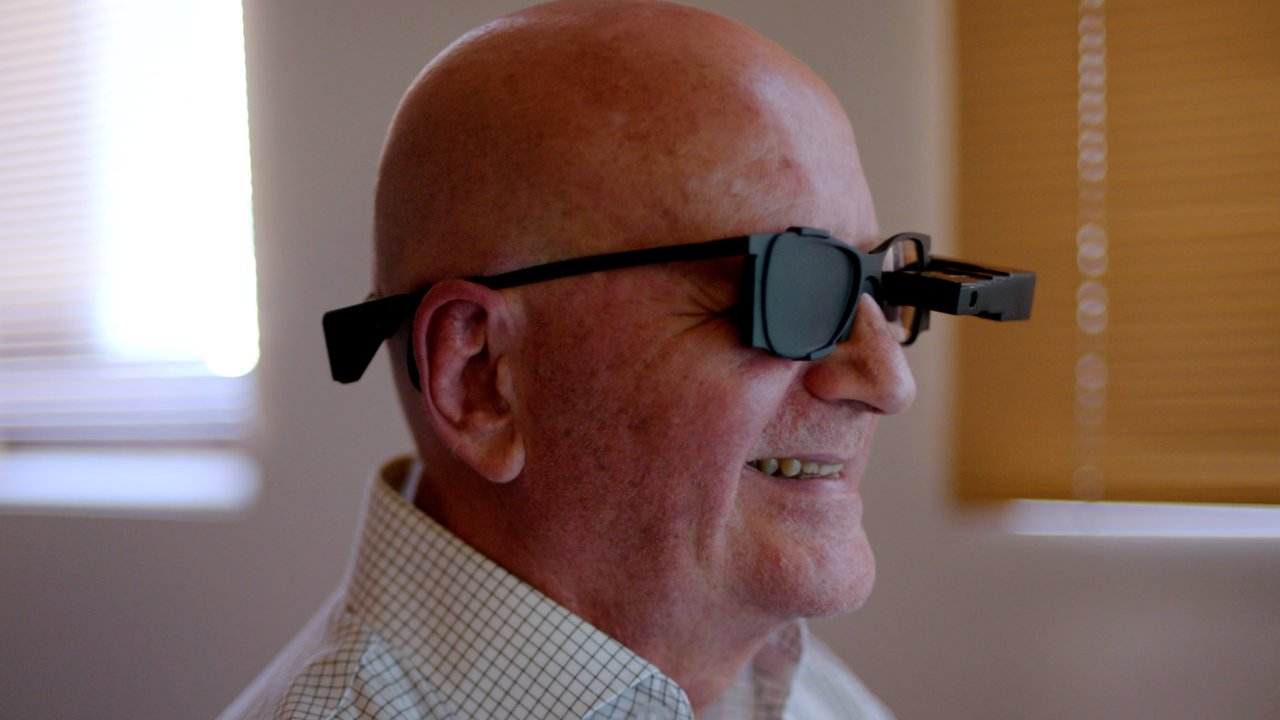
Our first patient with Stargardt disease received the PRIMA implant in May. During his first rehabilitation session, he saw a letter, and during his second session, he read a word.
Watch this video which follows his progress in the clinical trial:
In the U.S., the FDA granted Humanitarian Use Device (HUD) designations to PRIMA for advanced GA and Stargardt disease this past spring. The HUD program offers an expedited review for medical devices that treat patients with rare diseases or conditions. Once granted a HUD designation, a device must still be reviewed and approved by the FDA via a Humanitarian Device Exemption to treat patients outside of a clinical trial.
How PRIMA Works
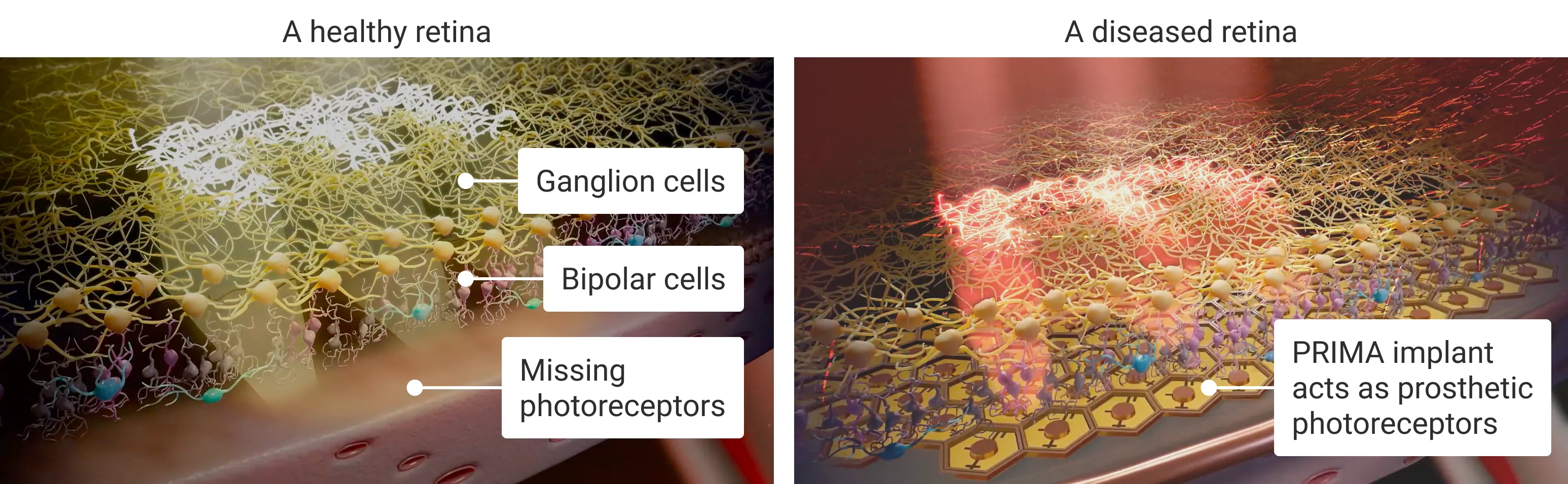
The PRIMA implant is placed under the retina, where the photoreceptors have degenerated. It uses photovoltaic pixels to convert infrared light sent from the PRIMA glasses into electrical signals that are picked up by the remaining retinal cells for transmission into the visual cortex in the brain. In this way, the PRIMA implant works like a set of prosthetic photoreceptors.
PRIMA is CE marked in the European Union and registered for supply in the United Kingdom. It has not been approved or cleared by the FDA and is not available for sale outside of Europe and the United Kingdom.
In Australia, PRIMA is an investigational medical device intended for pre‑market clinical investigation. It is not registered on the Australian Register of Therapeutic Goods and is not available for commercial use in Australia.
